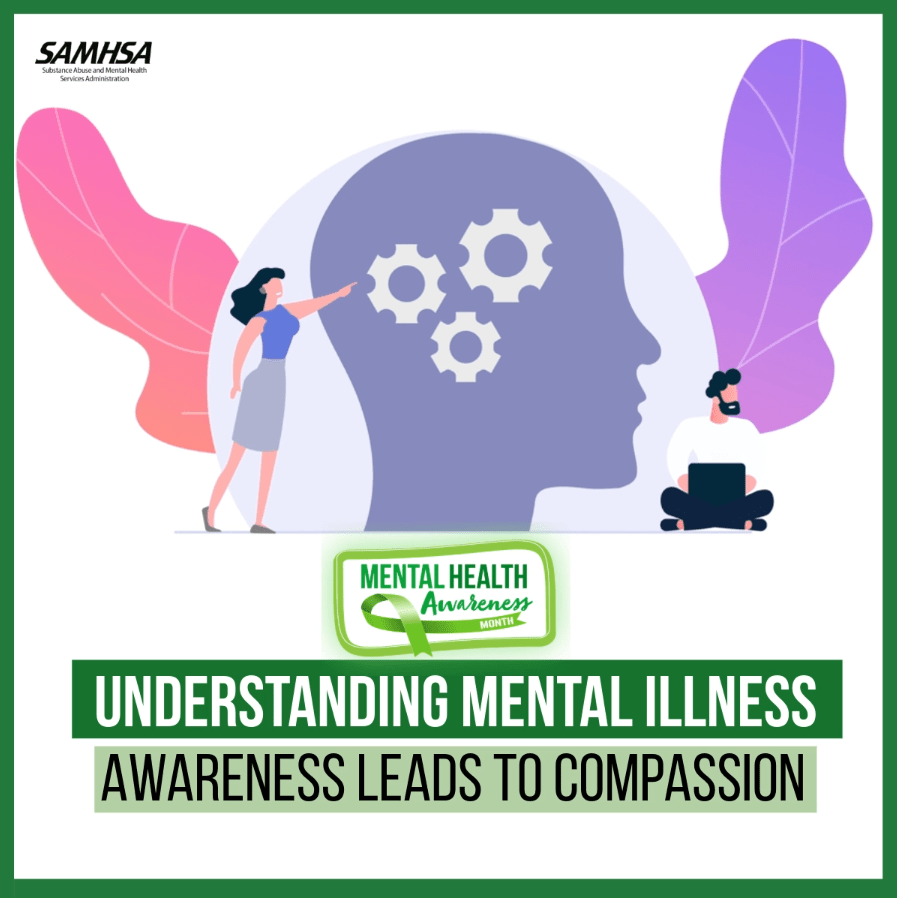
Source: SAMHSA Substance Abuse and Mental Health Services Administration
Mental Health Awareness Month (MHAM)Â has been observed since 1949. For more than 20 years, SAMHSA has joined that tradition every May, raising awareness, sharing resources, and supporting the individuals and communities who need it most.
During the month of September, Suicide Awareness is a focus around the world, shining a much-needed light on an issue that affects millions. The challenges of suicidal thoughts create a heavy burden, often leading individuals suffering from these feelings to believe they are alone in their struggles. However, it’s crucial to remember that help is available, and there are numerous resources that can provide support and guidance to those in need. Below, you will find a compilation of valuable resources that can be shared widely to reach those who may be feeling isolated or hopeless. By promoting open conversations and providing access to professional assistance and peer support, we can work together to reduce the stigma surrounding mental health challenges. Let’s find a way to actively engage in helping those in need, fostering an environment where empathy and understanding flourish, ultimately leading to a brighter, more supportive community for everyone affected by this serious issue.
“Knowing who you are starts with the Mind”, Bebe Moore Campbell
Each July, we honor the legacy of author, advocate, and trailblazer Bebe Moore Campbell by recognizing Bebe Moore Campbell National Minority Mental Health Awareness Month (also referred to as BIPOC Mental Health Month). Bebe Moore Campbell’s ability to tell impactful stories highlighting themes of racism, mental health, and family left a lasting mark on this world and is a foundation for much of the work that continues in support of Black, Indigenous, people of color (BIPOC) mental health. FYI –Source: https://mhanational.org/bipoc-mental-health/bipoc-mental-health-month/
MHA’s 2025 BIPOC Mental Health Toolkit was designed to help individuals and organizations in communities of color turn awareness into action. The Toolkit has Printables that you can download and print for your personal use. You will also find pdf worksheets, Reading and Resource lists. Click this link to download the 2025 Toolkit by submitting your email address. https://mhanational.org/bipoc-mental-health/bipoc-mental-health-month/
Every year around this time, I make it a point to find out what is available for Mental Health support for the BIPOC community. Bebe Moore Campbell was an advocate who understood the importance of focusing on the issues and needs of this community in order to make a way for resources. Caring is sharing, which I hope you will do with your loved ones, and by passing this information on. There is even more to gain by delving into the resources available.
Below is a quote from the website: Mental Health America’s 2024 BIPOC Mental Health Toolkit will provide free, practical resources to help navigate mental health stigma, bridge generational differences, dismantle mental health myths, and encourage meaningful conversations.